

Going Underground.
A tour of SubTropolis, the warehouse complex built into a limestone mine, plus a financing playbook from 2022 that may be back, how few new jobs the economy now needs, and the bunker boom.
IN THE MARKET
The Warehouse Inside a Limestone Mine
A business park under Kansas City has been making money off the same land three different ways for sixty years.
Back in September, the SETT team spent an afternoon touring SubTropolis, a business park built inside an old limestone mine under Kansas City. We've walked a lot of industrial projects over the years, but none were as unique as this one. You drive in off the street and just keep driving, past loading docks and offices on miles of paved, lit roads, with rock ceiling overhead the whole way. It felt more like an underground city than a business park.
The history dates back to a limestone mining operation that started in 1945. As the rock ran out, Lamar Hunt (the AFL founder who owned the Chiefs) realized the empty caverns could be leased, and Hunt Midwest opened SubTropolis in 1964. Ford showed up a year later to store parts for its nearby assembly plant and is still there. So is the Postal Service, which keeps a copy of every stamp ever produced in that location. Add the National Archives, the EPA and a film vault with original reels of Gone with the Wind and The Wizard of Oz, and it’s collectively one of the most unique rent rolls in the country.
PAID TO DIG THE BUILDING
We were particularly impressed with how many times Hunt Midwest has gotten paid for the same land. First they sold the limestone with rock from the mine going into local roads and the runways at Kansas City International Airport. Then they leased out the hole the rock left behind. Then they developed the surface on top of it, starting with Worlds of Fun in 1973 and later industrial buildings above ground.
They basically doubled their real estate without buying another acre.
THE SPACE ITSELF
It's definitely not the look of a modern bulk warehouse that is built above ground. Room-and-pillar mining has left tunnels around 16 feet high with 25-foot-square limestone pillars on 65-foot centers, amazingly the perfect clear height to accommodate 53’ semi trucks and trailers. Grainger's new Houston distribution center, by comparison, was designed with 36-foot clear and 52-by-50-foot bays. The clear heights underground are lower than we're used to, but tenants easily make up the volume horizontally. The columns also stood out to us as they're much bigger than what you'd typically see in a warehouse (which makes sense since they're literally holding up the earth above them).
In exchange, tenants get a much cheaper space to occupy. The underground environment stays at 65 to 70 degrees year-round, and Hunt Midwest says tenants save 50% to 70% on energy and 30% to 50% on rent compared with buildings on the surface. Those are the landlord's numbers, so take them with the usual grain of salt, but the listings back up the general idea. SubTropolis space has been advertised at $3.75 a square foot gross, while Kansas City's average industrial asking rent was running around $5.90 NNN, before taxes, insurance and CAM.
Our hosts from Hunt MidWest also emphasized speed. The underground cavity already exists, so there's no lengthy entitlement process and no shell to construct. Hunt Midwest markets new build-outs in as little as 120 days. Anyone who has gritted through lengthy approvals on a new project can appreciate what that's worth to a tenant who needs space on short notice.
WHO IT WORKS FOR
Looking at the tenant roster, it's pretty clear who the target audience is. Stamps, federal records and old film need a stable climate and good security far more than they need 36-foot clear. Auto suppliers down the road from a Ford plant care about being close and getting in fast. Most of these tenants have been there for decades, so it's obviously working for them.
It's also a good reminder for those of us who own and lease older industrial properties above ground. We tend to lead with clear height and column spacing because that's what the big users ask about first. Plenty of tenants are shopping other factors, like operating costs or how quickly they can be up and running, and an older building that delivers on those can compete better than its spec sheet suggests.
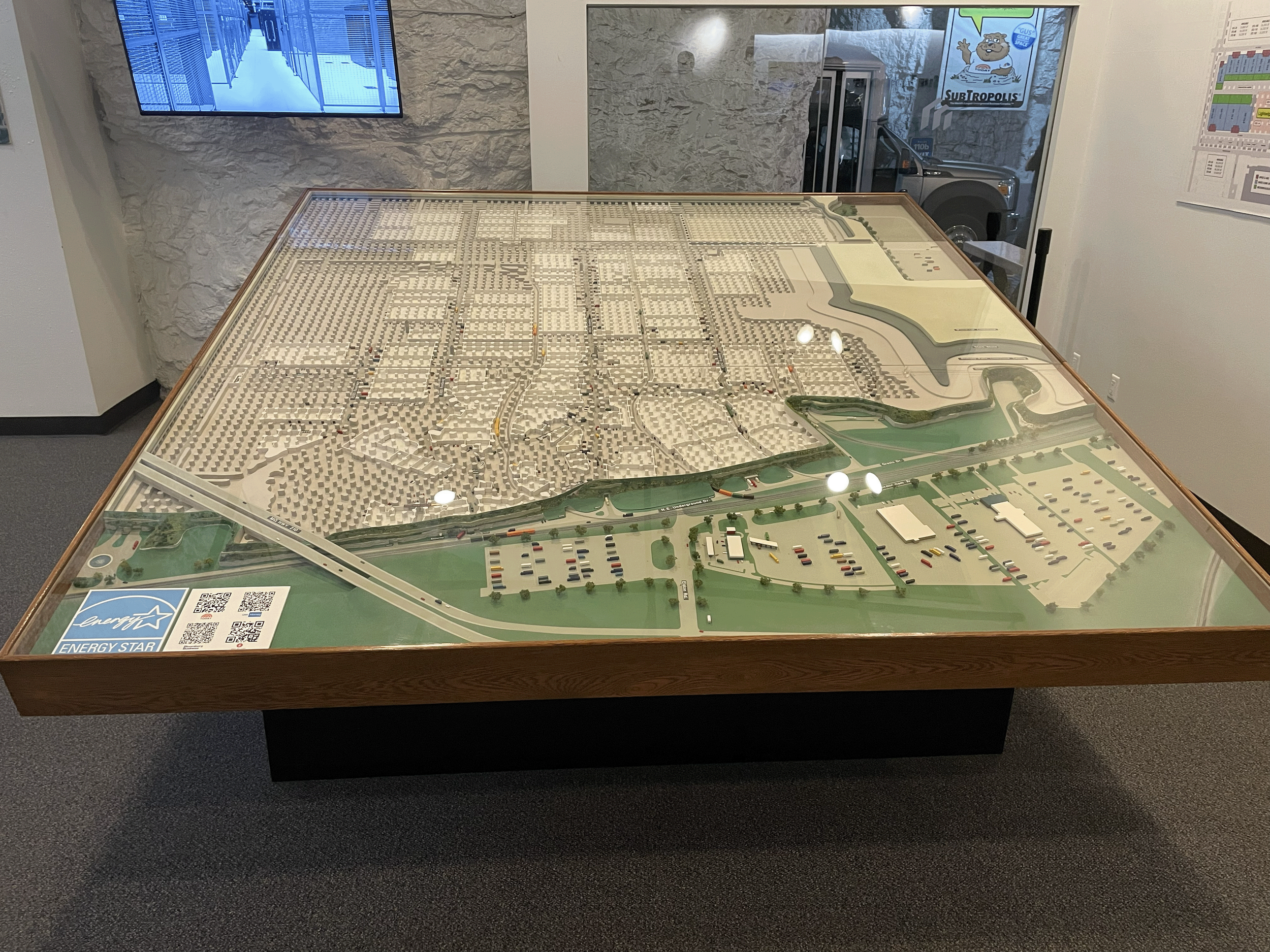
Scale model of the underground development
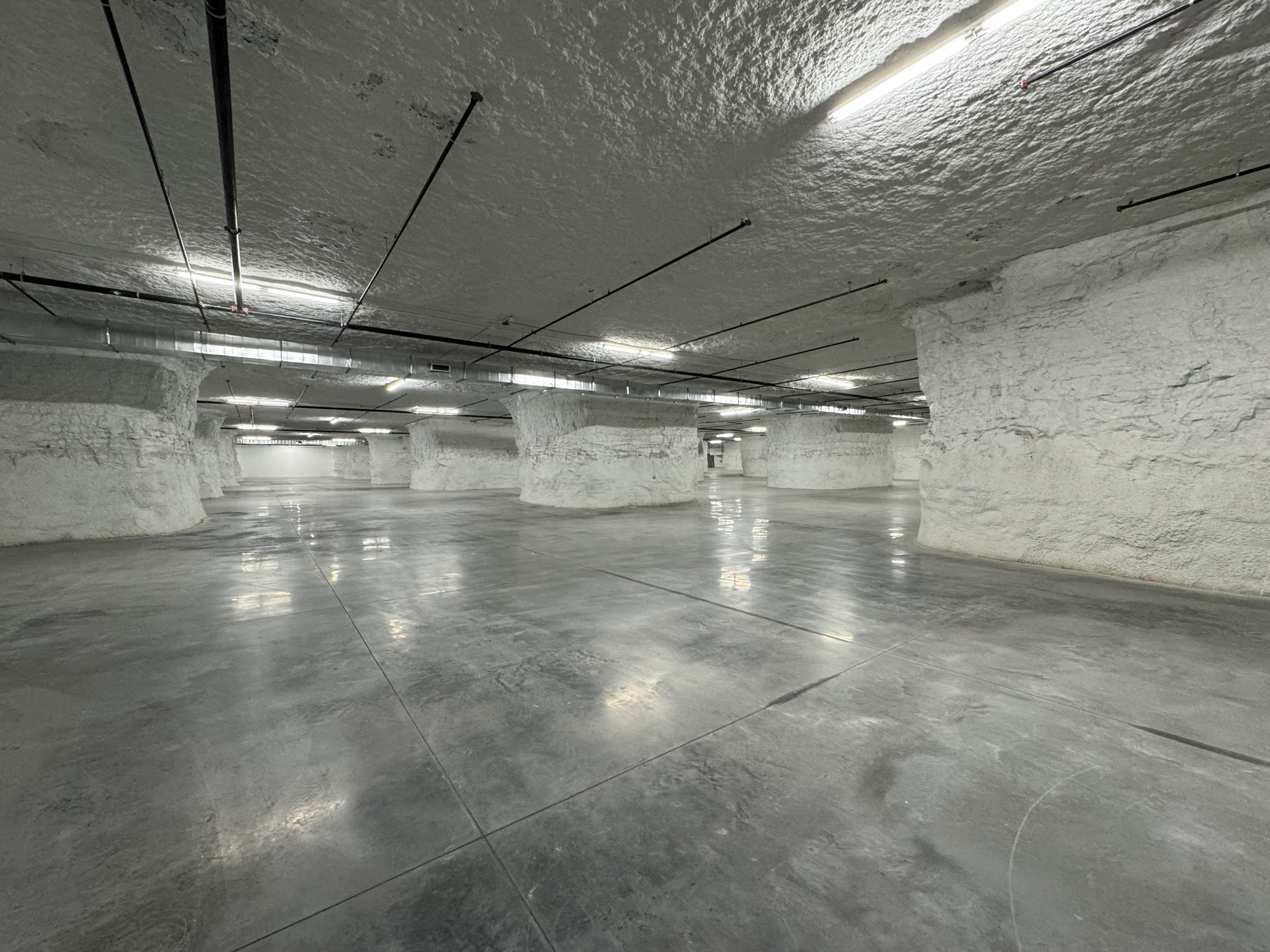
Interior of available space
ON OUR MINDS
i. Financing with SLBs.
Sale-leasebacks set a record in 2022, right as the Fed was raising rates at its fastest pace in decades. For many companies, selling their real estate was more accretive than refinancing at elevated rates. With the 10-year back around 5%, could we see that playbook again?
ii. Fewer jobs needed.
October’s jobs report beat expectations, but what really jumped out was how few jobs the economy now needs. With boomers retiring and immigration slowing, the monthly job growth needed to keep unemployment steady has dropped to roughly 5,000 by one estimate, down from about 166,000 just a few years ago. Time will tell if this is a blip or a trend, but if it does persist, what does that mean for future CRE demand?
iii. Underground, part two.
Is your bunker ready yet? The UK kicked off a “Be Ready” campaign urging people to have at least 72 hours of supplies on hand, and in the US, the Pentagon is prepping bases to run for 90 days “just in case.” Developers caught on to this a while ago. One bought a decommissioned missile silo for about $300,000 and turned it into luxury condos that now sell for up to $5 million. Maybe an opportunity for Hunt Midwest to add a fourth revenue stream to SubTropolis with another level underground for bunkers?
We remain grateful for your continued partnership and trust. If any of these topics hit close to home - whether it's a lease decision on the horizon, an acquisition or disposition question, or just a conversation about where the market is headed - we'd welcome the chance to think through it with you.
Want to discuss this with our team?
Contact Us →